
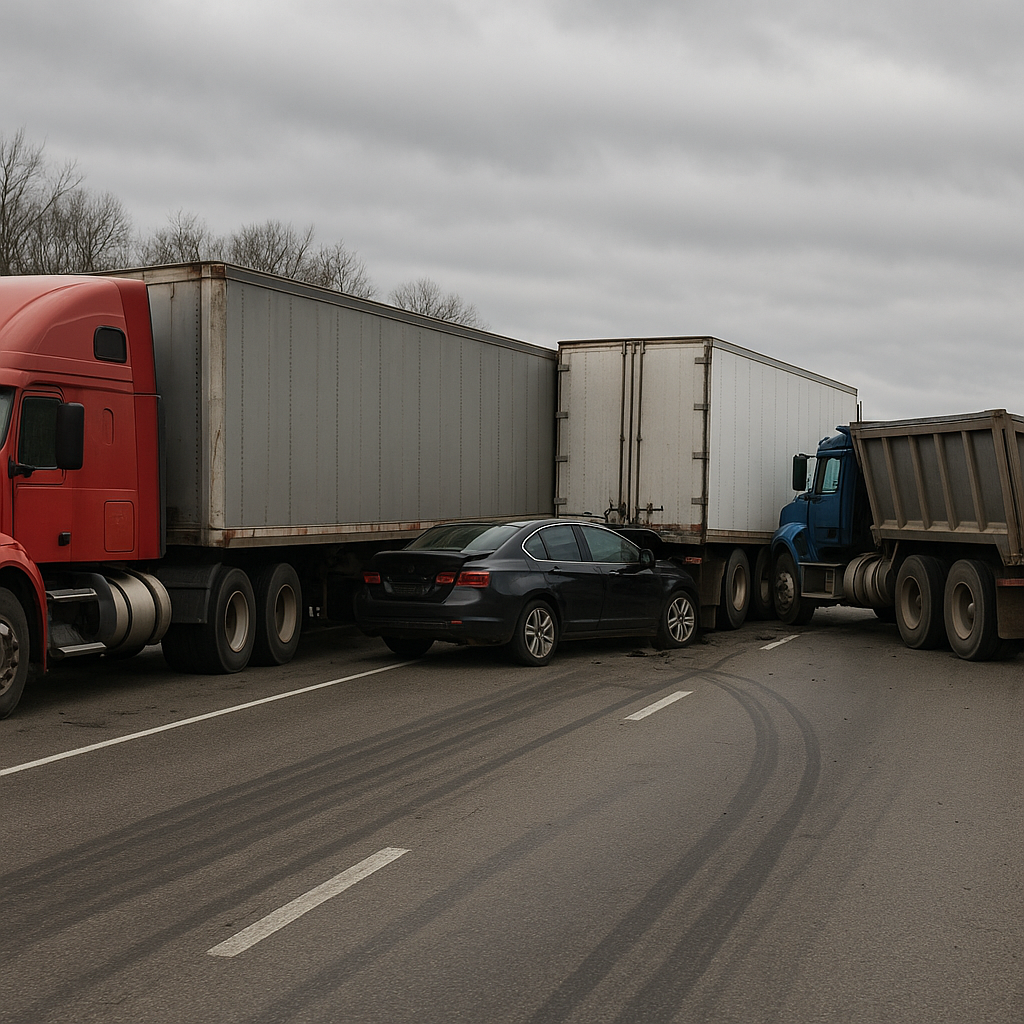
Understanding Liability Allocation in Multi Vehicle Truck Crashes
Overview of Insurance or Liability Issues
Multi vehicle truck liability is an area of insurance law and claims processing that presents unique challenges. When several vehicles, including at least one large commercial truck, are involved in a crash, the process of assigning responsibility for the damages and injuries is known as “liability allocation.” This process is crucial for determining which party (or parties) will be responsible for compensating victims, repairing property, and covering medical costs.
Liability in multi vehicle accidents is not always straightforward. The involvement of trucks—vehicles governed by additional federal and state regulations—introduces more stakeholders and complexity. The insurance systems that apply to personal vehicles and commercial trucks are often very different, making it essential to understand how multi vehicle truck liability is assessed, disputed, and allocated.
How These Issues Arise After Truck Accidents
After a major multi vehicle crash involving a truck, the situation may quickly become complex for all parties involved. In some cases, the presence of a truck increases the scale of damages. Trucks often carry heavy cargo, sometimes hazardous materials, and their size and weight can cause chain-reaction collisions. As a result, it is common for such incidents to involve many vehicles, multiple insurers, cargo owners, employers, and public authorities.
Immediately after an accident, investigations are triggered by law enforcement agencies, insurance companies, and—for commercial vehicles—federal regulators such as the Federal Motor Carrier Safety Administration (FMCSA). These investigations seek to clarify:
– The sequence of events leading up to the crash
– The actions of each driver
– The condition of each involved vehicle (brake condition, maintenance records, driver logs)
– Compliance with applicable trucking and road safety laws
Each insurer involved will attempt to assess the proportion of fault assigned to their policyholder. In some jurisdictions, this is done using comparative or contributory negligence rules, which can impact how much compensation is owed—and by whom.
Parties Commonly Involved
When a multi vehicle crash involves at least one truck, several distinct parties are often engaged in the process of liability allocation:
Truck Drivers and Trucking Companies
The actions of the truck driver are closely scrutinized, and if the driver is an employee, the trucking company (carrier) is usually vicariously liable for any misconduct or negligence. The carrier’s own safety policies, fleet maintenance, and driver supervision practices come under review.
Other Motorists
All drivers involved—the operators of other passenger cars, motorcycles, or commercial vehicles—are part of the liability analysis. Their actions before, during, and after the collision are relevant. Duties such as following at a safe distance, obeying traffic signals, and reacting appropriately to traffic conditions are considered.
Brokers, Shippers, and Cargo Owners
Sometimes, additional commercial entities (such as freight brokers, shippers, or cargo owners) are drawn into the liability process. If a crash involves issues such as improperly loaded cargo, questions may arise about who was responsible for the load and whether they contributed to the collision.
Insurers
Each party’s liability insurer, including those providing primary, excess, and umbrella coverage for the trucking company or other drivers, are involved. Insurers assess potential exposures, gather investigation results, and often engage in negotiations to settle claims.
Public Authorities
In rare cases, local or state authorities may be found partly liable, especially if hazardous road conditions or improper signage contributed to the incident.
Common Sources of Confusion
Multi vehicle truck liability cases can be highly intricate, and confusion often arises from a variety of sources:
Multiple Point of Impact and Sequence of Events
Determining the “first cause” or primary impact can be extraordinarily complex in pile-up situations. Crash reconstruction experts may be required to piece together evidence from vehicle positions, skid marks, camera footage, and witness statements.
Apportionment of Fault
With more than two parties involved, the allocation of fault may be split across several drivers, with each insurer arguing that their policyholder was not—or was only partially—responsible. In some jurisdictions, if a party is found to be more than 50% at fault, they may be barred from recovering damages, leading to contentious disputes.
Policy Limits and Layers of Insurance
Truck carriers often have multiple layers of insurance to account for the greater risk of catastrophic damage. There are often disputes about which insurer’s policy is “primary” and whether excess coverage kicks in.
Regulatory and Legal Complexity
Trucking is subject to specific federal and state regulations, including hours of service, maintenance requirements, and documentation. Questions about compliance can affect liability allocations, and legal standards may differ from those that apply to private motorists.
Chain Reaction and Proximate Cause
Determining which parties’ actions foreseeably led to the sequence of crashes (versus those who were merely “caught up” in the event) is legally complicated. Courts and insurers must distinguish between proximate and remote causes.
Why Truck Cases Differ from Car Accidents
Multi vehicle truck liability is not simply a scaled-up version of standard car accident claims. Several factors make truck crash cases notably different:
– Commercial Regulations: Trucks must comply with the FMCSA’s detailed rules on operation, maintenance, and driver qualifications. Violations can shift or increase liability.
– Cargo Considerations: Improperly secured, hazardous, or overweight loads may bring additional liability against shippers or loaders.
– Severity of Damage: The impact force of trucks can lead to larger, more complicated claims, involving extensive injuries and multiple fatalities.
– Insurance Structure: Commercial insurance policies often layer coverage and involve higher policy limits, attracting more rigorous scrutiny and complex settlement discussions.
– Investigation Scope: Truck crashes usually prompt more intensive investigation, involving federal and corporate scrutiny, black box data analysis, and often expert testimony on industry standards.
Conclusion
The allocation of liability in multi vehicle truck crashes is a multifaceted area, shaped by legal doctrines, insurance structures, and commercial practices unique to the trucking industry. The parties involved, from truck drivers to brokers and public authorities, all play a role in how responsibility is ultimately allocated. Understanding these unique elements is key to grasping why multi vehicle truck liability cases are often far more complex than accidents involving only passenger vehicles. This complexity underscores the importance of rigorous investigation and a careful, coordinated response from all parties involved.